Chapter One
Sussex England - 1327
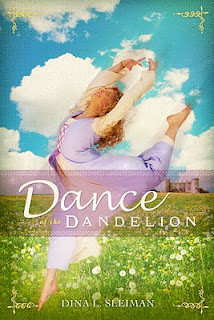
The gray stone castle beckoned from atop the grassy hill, waiting, calling to me as always. Its turreted towers rose tall and strong as sentinels on either side—solid, dependable, so unlike my own wattle and daub hut down the lane. Pennants in the Worthing colors of garnet and gold swayed against a vibrant blue sky.
“Dreaming again, are you, Dandelion?” Alice’s voice came from behind, jolting me from my trance.
I swiveled from the window. My eyes took a moment to adjust to the dim interior of Father John’s kitchen with its wood-beamed walls. Alice’s rosy face came into view. She held a basket of bright orange carrots against her ample hip.
A warm flush worked its way up my cheek at being caught musing yet again. “I was putting the bread on the sill to cool.” If only my telltale cheeks would cool as well.
“Seems you left your mind in the castle courtyard near the ovens where you baked that bread.” Alice placed the carrots on the table and picked up a long knife. She waved it toward the backyard where my closest friend, William, sat under a shady tree, studying a Latin text. “Perhaps you ought to turn your thoughts closer to home.”
I huffed. William had ignored me when I walked by moments earlier. “To what? Latin? You’re the one who told me a woman could go further in life with domestic skills.”
“Indeed, my sweet. But well you know I am referring to that handsome boy holding the book and not the text itself.”
“He is far too busy with his studies for the likes of me. Besides, well you know I plan to aim higher than William Ashby. Goodness, he might yet end up in the church if Father John has his way.” I took the carrots and knife from her hand and began slicing.
“Oh, leave those.” Alice offered me a basket instead. “Go and collect some flowers for your new kirtle. It’s beautiful outside.”
A smile tickled my lips. “Buttercup yellow with a sage green mantle. Oh, Alice, you are too good to me.” I couldn’t hold back a squeal. Nor could I wait to throw this tattered brown tunic I wore into the rag heap. The new kirtle would show off my subtle curves to perfection. Although I had learned the basics of weaving and sewing as a child, I was anxious to continue my lessons in dyeing and embroidery.
Taking the basket from her, I gave Alice’s plump shoulder a squeeze. How could I thank her enough for the opportunities she had offered me? Me, Dandelion, daughter of the crippled cottar. Alice claimed with my new skills I could work in a town or open a shop someday, but I dreamed only of working and living at the castle. There I would remain close to my family and provide for them as I always longed to.
She batted me away with an affectionate swat. “Go on with you now. And while you’re at it, that fine young man beneath the tree might need some incentive to keep him from taking holy orders. Don’t wait until it’s too late.”
Of course, everyone knew that “housekeeping” was the least of Alice’s duties in the home of our village priest, but as the dear woman tended to the needs of the poor and the sick alongside Father John, no one dared complain. Such arrangements were common enough. I had seen with my own eyes the devotion they shared. Perhaps Alice wished to protect me from falling into a similar fate. But I highly doubted William was the man for me.
I crinkled my face and shook my head before walking out the door into the bright golden sunshine. As I passed by him beneath the tree on my way to the garden, I decided to heed Alice’s sage advice nonetheless. “God give you good day, William.”
He grunted but never even looked up from his blasted book. Beyond William’s feet in the shade sat the smooth patch of dirt where Father John taught us our letters and numbers, where we later scratched complex mathematics equations with a pointed stick. Once, Father John drew a map of the whole world and gave us a thorough geography lesson on that patch. It was filled with fond memories of William, my baby brother Tim, and me, working side by side to make a better life for ourselves and escape this peasant village.
I continued the conversation on my own. “Yes, and a lovely day it is. Don’t you think? The perfect afternoon for picking flowers. Remember when we picked flowers together, Willliam?” We used to do everything together.
He raised his brow at my chatter but said not at word. Although William did indeed love to study, his behavior toward me seemed oddly rude of late. Had I evaded his veiled hints of marriage one too many times?
I proceeded to ignore him as well and settled myself in the garden, inhaling a deep whiff of the fertile Sussex countryside. Who needed the likes of William Ashby? Glancing across the valley, I took in fresh-turned earth bursting with life beneath the azure sky, sloping green hills dotted with fluffy white sheep, meadows of wildflowers, a gurgling stream, and the dappled forest beyond. I had danced through those fields as a child. My feet itched to spin and leap even now, but at sixteen, I grew old for such nonsense. Instead, I applied myself to the more pressing task of locating the perfect blossoms for my precious kirtle. I surveyed a cluster of blooms that looked just right and ran my fingers across the moist, silken petals.
“Dandy, come over here,” William shouted. “Can you help me make this out?”
So now he wished to speak with me?
I bent over and continued my search for the ideal yellow blossoms.
A hair ribbon fell in my eye, and I swiped it away. Assisting Alice, I amassed quite a collection of them. My favorites were violet, sky blue, and sea-foam green. Each brought out a different shade in my exotic eyes, William said, and a different side of my personality. I wore the purple ribbon today. Purple stood for passion.
“Dandy, please.”
I wished my brother Tim was with him under that tree hard at work at his studies. Unlike me, an academic education could in truth take him far in the world. Father John offered a priceless gift to William and Tim. The gift of a future. Yet more oft than not, the eleven-year-old boy tossed it aside to romp through the forest with his friends. I should set down this basket and drag his thieving behind back here this minute. He may not care about his own well-being, but I most certainly did. And I had no desire to see him tied to a whipping post.
“Marian, please don’t ignore me. I need you.”
William’s use of the nickname made me laugh. It brought to mind that he and I had once run through the woods as members of Robin Hood’s merry band of poachers as well. Perhaps I should not begrudge Tim the fun. It was a miracle the lad had survived 1315, the year of the great famine. His weak infant whimpers called to me over the distance of memory even now.
I ran my fingers across my brow to wipe the thoughts away. He was the last born boy and our family treasure. Surely Tim would be fine. After all, the castle steward remained our longtime ally.
“Please, come and help me. I’m truly stuck, and Father John won’t be home for hours,” William called.
“But I’m all covered with dirt. Goodness, William, you act as if you’re the only one with anything important to do. Bring it over here.” I brushed my hands on Alice’s old apron.
He walked toward me. “It’s unfair you have such a knack for languages when you don’t appreciate it.”
“It’s unfair I cannot make good use of my knack for languages, thus I must content myself to sew.”
William looked stiff from too much sitting as he joined me. “Right here, Dandy. It’s right here.” He pointed to the page. “I can’t seem to wrap my mind around it.”
“Hand it over.” I snatched it from him. “‘Est autem fides sperandorum substantia rerum argumentum non parentum.’ Hmm. ‘Now faith is . . . .’ Well, that is simple enough.”
“Yes, yes, I got that part, it’s the next that puzzles me.” He leaned in and took the other side of the book.
As he pressed close, I bade my errant heart to still and focused upon the words. “Well, I guess it says . . . being sure or being certain. Substance would be the easiest translation, but it doesn’t make any sense.”
He stopped and looked up at me for a moment. Some emotion I couldn’t read flashed through his eyes. “Perhaps that’s right. It does seem odd, though. ‘Now faith is the substance of things hoped for and the proof of things not seen.’”
“No, no, not proof, it looks more like argument. Evidence, perhaps. It’s all gibberish if you ask me. I don’t think it was written down properly. Someone should fix it.”
He pulled the book away from me. “You shouldn’t talk that way about the Word of God. If we don’t understand it, then I suppose we are the ones in need of fixing.”
I glared at him. “Oh fie. Really, William, I don’t know how much more of your piety I can stomach. Do you truly plan to become a priest? You could be a clerk or a bailiff or something practical with all you’ve learned.”
“You’re missing the point entirely. Give it a try. ‘Now faith is the substance of things hoped for, the evidence of things not seen.’ It’s . . . as if faith is something we can touch or hold. Perhaps by our faith, we make things real, as if our very faith is all the proof we need. There, it does make sense. I can’t see God, but I know He is real, and that very knowing is all the proof I need.”
“Yes, yes, it’s spellbinding.”
He brushed off my sarcasm. “And look, there’s more still I think, in the word hope. We don’t have to hope God exists, that would be silly.”
“Silly indeed.” I rolled my eyes.
“It seems as if the hope may be bringing things into existence. Perhaps our faith is some sort of force to bring about change.” He tapped on the page. “See, I told you, it is compelling if you just put some time into it.”
“Truly, you give me a headache with all the time you put into it.”
“Don’t you understand at all?” He reached toward me but let his hand drop.
“Faith . . . faith is a force? Like fairy magic I suppose.” I stood up and walked to a nearby tree. Leaning against it, I settled my gaze upon the castle. “Why, as a matter of fact, I do have faith. I have faith that one day a handsome prince shall gallop in on a black charger and sweep me away. He’ll take me to a distant land, and there he shall build me a lovely manor of gray stones with flowers all about instead of an ugly old moat. It will be filled with books and beautiful fabrics. It will be quite charming, I’m certain. So there you are. Do you fancy I can hope that into existence?” I turned back to him and lifted an eyebrow.
He shook the book in the air. “God’s teeth, Dandy, why must you twist everything and make it about your stupid dreams and your vanity? Why not say Lord Thomas Worthing? I know full well that’s who you think of, that spoiled fool running around Scotland killing people for Lord only knows what reason. What an idiot you are. My mother is right. You are by far the most selfish, arrogant heathen on God’s green earth. That I have faith of, indeed.”
Thoughts of Lord Worthing never failed to rile William, but his shabby treatment of me had gone on long enough. “I’ve wasted quite enough time on this stupid conversation and the likes of you, William Ashby.” I gathered my flowers, turned, and walked away, stomping my bare feet against the dirt lane.
I had last caught sight of his lordship five years earlier on this very lane. He indeed rode a fine charger, looking every inch the strong, handsome knight with his garnet and gold colors flying in the wind. Cantering past me, he had smiled and winked. Rather than remaining angry with William as I should, the memory made me grin. I turned my lips back to a pout before he could see.
William trotted at my heels like a kicked puppy as I turned upon a wooded trail. “Dandy, I’m sorry. Please don’t be cross with me. I just worry about you.”
“About my eternal soul or whom I shall marry?” I continued walking.
“Well, I wouldn’t be much of a friend if I didn’t worry about your soul, and if I get a little jealous, it’s because I care so much. Fairy stories are fun, but those sorts of imaginations can only bring trouble. You’re still my prettiest girl, though, pretty enough to be a princess.” He spoke directly into my ear in his most charming voice, a deep manly voice that made me quiver.
I pushed him away. “Oh, stop it. I forgive you, I suppose. We both know I shall eventually.”
“Come, let’s sit by the river like we did when we were children.”
I smirked. William fancied himself so grown-up. As we continued down the leafy trail, he used the excuse of climbing over a fallen log to take my hand, then never let go, gallant indeed. It felt so warm and safe in his large rugged palm. We had been best friends for so long I oft forgot how handsome his sandy hair looked falling in soft waves about his wide cheekbones.
A child squealed at a distance. William had given up poaching for religious reasons long ago. However, he passed the role of Robin Hood to Tim, who rounded up his own troop of merry men. The new crop of boisterous young hunters filled the woods with happy sounds of adventure and thievery.
At nineteen and sixteen William and I were children in so many ways, still learning and discovering the world, yet fully grown by everyone’s expectations. I gazed up at William’s face. It narrowed nicely down to a cleft chin and full lips. He stood tall and natural like the woods around us, slender but strong, a peasant girl’s dream, but to me he was a friend. Wasn’t he? Every girl in the village might long for him, swoon in his handsome presence, but surely I had higher ambitions than William. Didn’t I?
My older sister Saddie planned to marry soon. She seemed happy enough with the prospect, and why not? It was the best she ever wished for, the best she could expect—marriage to a handsome young villein, working in his family’s fields, raising his children, growing more peasants to work in more fields. Never mind they would both be old and gray within ten years. Never mind she would likely die in childbirth long before then. My brother Robert was ever slipping into the woods with a redhead from down the lane. No doubt he’d be on the path to matrimony before long. But that sort of life was far from enough for me.
~*~
I held tight to William’s hand as we approached the Arun River, the namesake of the castle and the village. We sat on our favorite warm rock, and to my surprise, he wrapped his arm around my waist. With his free hand he took a springy lock of my wheat-colored hair and twisted it about his finger, causing my stomach to twirl as well.
I attempted to lighten the mood. “Not such the holy saint now, are you?” Yet, the quiet breathiness of my voice surprised even me, and the result was quite the opposite.
“Dandy, you asked about me becoming a priest, but you must know how much I love you. I would give it all up in a second if I thought you would marry me. It’s just when you talk all wistful about some high, fancy lifestyle, I fear I don’t have a chance.” He caressed my cheek.
A tear filled my eye at his very nearness. I turned my head into his palm and rested it there. “Oh, William, don’t—”
“No, please. I can’t give you a castle, Dandy, and you know I’ll never have a black charger. I’ll be lucky to have any sort of horse at all. But, if I work terribly hard, I can make a life for us. I’ll build you the prettiest little cottage right over there on the hillside by the river. I can see it now. I’ll dig and gather the stones by hand. I will. I’ll do it just for you, and we’ll plant the loveliest ring of flowers around it you ever did see.”
I could almost picture it. My head grew swishy at the tickle of William’s breath against my skin.
“I’ll build a bridge over the river, and I’ll make a path of cobblestones going right to the door, so you won’t get your feet muddy, or your shoes either. I’ll see to it you have shoes and plenty of clothes and warm cloaks for the winter, you and every one of our children. And I’ll wake you up each morning with a cup of fresh milk from our very own cow . . . a cup of fresh milk . . . .” His voice faded. “And kisses. I’ll cover you head to toe with kisses each and every day of our lives.”
My breath caught in my chest.
True to his word, he kissed my cheeks, my eyes, the tip of my nose with his full, soft lips. I thought nothing in the world could feel better than his velvet touch, until he tipped up my chin, and his trail of kisses reached my lips. They came alive beneath his and moved of their own accord. A bubbly warmth filled me to my fingertips and toes. I knew I should stop him, stop this fantasy, but he had drawn me in as well. It all seemed so real, so very real and possible as we sat kissing in the sunshine. Oh, how I wanted this moment to be true and last forever. I never dreamed of such bliss. In all of my planning and scheming, I never planned for this.
William pulled away, struggling for breath, and stared into my eyes. My heart fluttered in my chest. I could see my own amazement mirrored in his golden-brown orbs. He let go of me and lay back on the rock with a long sigh. We remained in our separate reveries, yet somehow one. I edged forward and dipped my toes in the cool flowing water, swishing them to and fro, reliving the kiss again and again, touching my lips where the tingle remained.
Then William roused me back to the present. He held in his hand a crown of cornflowers he had woven as I mused. He placed it upon my head and ran his fingers down the length of my hair. “Now you look a princess,” he said. “The cornflowers match your blue eyes, and with those golden tresses cascading down your shoulders, who would dare deny it?” He reached for another flower and formed it into a tiny circle this time. He lifted my hand and slid it with ease onto my fourth finger. A good omen, Saddie would say. “Dandelion, fairy queen of all I see, I may not be a handsome prince, but will you marry me?”
“Oh, William, you’ve been reading far too much poetry for your own good.” I gave him a playful shove, breaking the spell.
But it was midsummer, and we had discovered a new delight, sweeter even than the pink shiny candy Lord Worthing had once given me. Day after day we were found kissing on the rock.
Tim and his cohorts teased us mercilessly. They snuck up behind us one day completely unheeded and pushed us into the water. We just splashed back up at them and continued kissing, soaking wet and knee-deep in the river. If only matters could have remained so simple.
~~~~~~~~~~~~~~~~~~~~
For more sample chapters, click here.