Join the Adventure Giveaway

Winner of the American Christian Fiction Writer's Carol Award for Dauntless!!!
Showing posts with label Writing Business. Show all posts

Monday, January 13, 2014

Meet WhiteFire Publishing - A Small Press for a New Generation

Between the nearly impossible to break into and often predictable world of big publishing houses and the danger and unpredictability to both readers and writers of self-publishing, there is another option. Small presses. These companies are opening up new opportunities for both writers and readers.

I've had the pleasure of serving as an acquisitions editor for a small publisher called WhiteFire Publishing for the past three years. WhiteFire began with a goal to reach under served markets. We wanted to be an outlet for books that were beautifully written but hard to sell. We also wanted books that were more realistic than some of the Christian publishers were looking for. At the same time, we wanted our books to have a deep sort of spirituality. We favored big books that crossed genres and offered a little something extra and exciting. Finally, instead of focusing on a middle aged audience as so many bigger Christian publishers do, we wanted books that would speak to all ages and that would draw a younger fan base who could grow with us.

I think more than anything else, these quotes from our authors express what we're all about.  Christine Lindsay had this to say, "I appreciate WhiteFire's desire to show the Christian faith in stories that will hopefully touch the hearts of those who are seeking." Susie Finkbeiner said, "They took a risk on me...they mentored, encouraged, and taught me so much about being a novelist...WhiteFire is a community of writers and readers with a deep passion for spirit filled literature." Normandie Fischer added, "I feel so privileged to be published by a company with heart, run by folk who care, and who show it by walking out their faith in matters of business and prayer.June Foster said, "I'd like to commend WhiteFire for living up to their logo - Where Spirit Meets the Page."And April McGowan said, "As a first time novelist, I didn't know what to expect...but, you all put me at ease immediately with your sense of humor and encouragement." And I'll wrap it up with this one from Golden Keyes Parsons, "I love the feeling of worth and value that WhiteFire gives to the individual author."

We started with just one book in 2009, then three in 2011. 2012 was a slow year as we got our systems in place, looked for quality submissions, and hired a nonfiction editor. But in 2013 we really took off, adding contemporary and nonfiction to our line, and 2014 is off to a strong start as well. So I'd like to give you a quick overview of what WhiteFire has to offer. Keep in mind as you scroll through, that all of these are available as ebooks for under $3.99. They are also available in print if you prefer. Find them online at amazon.com or barnesandnoble.com.

2009
A Stray Drop of Blood by Roseanna White - Set in the days of Jesus, this edgy book full of drama, romance, and spiritual insight is Biblical fiction at its finest.
2011
Jewel of Persia by Roseanna White - More awesome Biblical fiction, this time featuring a fictional wife in Xerxes court during the time of Esther.
Shadowed in Silk by Christine Lindsay - A realistic historical set in Ghandi's India. You will be swept away by the romance, suspense, and gorgeous setting. *
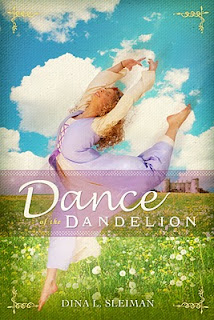
Dance of the Dandelion by Dina Sleiman - A unique romantic coming of age saga which begins in a 13th century village in England and travels to far off Italy. *
2012
Walks Alone by Sandi Rog - An American set historical romance with a hunky Indian hero who you are sure to fall in love with.
Trapped by Golden Keyes Parsons - The first in a series of Biblical novellas featuring nameless women of the Bible.


2013
Historical and Biblical
Captured by Moonlight - The even better sequel to Shadowed in Silk. *
Alone and Broken - More Biblical novellas by Golden Keyes Parsons.
Contemporary Fiction
The Good Girl by Christy Barrit - A really fun romantic suspense novel by this well-loved, multi-award winning author, featuring edgy characters and maybe even a ghost!
Paint Chips by Susie Finkbiener - Deep women's fiction dealing with abuse and human trafficking yet full to the brim with humor, grace, light, and hope.
Jasmine by April McGowan - Romantic women's fiction that also takes a look at the harsher realities of life while offering hope and healing along the way.
Sailing out of Darkness by Normandie Fischer - Another romantic women's fiction featuring nautical themes, Italian settings, and a cool supernatural element.
Dance from Deep Within by Dina Sleiman - Yet more romantic women's fiction featuring a Muslim heroine, a bi-racial hippie, and a blonde ballerina who join forces to face life's challenges.
Nonfiction
Catching up with Daylight by Gail Kittleson - An artistic memoir full of spiritual insights and God's light.
Listening Prayer by Joanne Hillman - Learn to listen to God's voice and tap into the power of journaling.
Mountains, Madness, & Miracles by Lauralee Bliss - Join this popular CBA romance author as she takes a 4,000 mile journey along the Appalachian Trail and straight into the heart of God.

*During these first few years we've also been getting some notice on the award circuit:
Shadowed in Silk: Grace Award Winner 2011 for Action/Adventure/Epic/Expansive, and Readers Favorite Award 2012 Finalist
Walks Alone: Grace Award Winner 2012
Dance of the Dandelion: Honorable Mention in the 2012 Selah Awards
Captured by Moonlight: Readers' Favorite Award 2013 Finalist for Christian Historical Fiction


What's in store for 2014? At least another ten or so books for sure. Although the schedule is not completely set for the second half of the year, let me share a few books I'm really excited about. Ryan's Father by June Foster is a unique romance featuring a hero struggling with homosexual tendencies. It is a brave book and a worthwhile read for sure. Soul Painter by Cara Luecht is a gothic historical of the highest rank. Cara is a debut author to watch out for. I expect great things from her. No Plan B is a nonfiction offering by our first male author, Nelson Hannah. More books are coming from Susie and April, plus sequels from Christy, Roseanna, Christine, Golden, and me.

But perhaps more exciting than any of these for our Inky readers will be...drum roll please...this awesome, whimsical historical romance from our own Suzie Johnson, Sweet Mountain Music, set in Washington and featuring a surprising and very fun character :)

Have you read any WhiteFire novels? What are some of your favorite publishing houses, or do you pay attention to publishers at all?

Monday, December 9, 2013

My Publishing Journey

(As seen on Novel Rocket)

Recently I read Michelle Griep's Novel Rocket post about her fairy tale publishing journey with David C. Cook's digital first line (A True Fairy Tale). A year ago I was living out a similar fairy tale. With one small press historical under my belt, I was encouraged to write a historical romance. Less than twelve months after I even had the idea for this book, Love in Three-Quarter Time released through a brand new digital first line with a very well-respected company.

But as so often happens in the publishing industry, my experience did not turn out to be a fairy tale. It turned into something more along the lines of a nightmare.

After releasing my lone little book, the new line shut down. I understood this, really I did. I took a risk along with them, and this time around, the risk didn't pay off. But the short version is that my lone little book for the most part fizzled along with the line.

At this point in my career, I turned to God with a lot of tears and anguish. What should I have done differently? Honestly, I couldn't think of a single thing. All that came to mind was an article Gina Holmes wrote in 2011 about God damming up our writing careers (Dam Isn't a Four-Letter Word). The basic idea was that sometimes, even though we are ready as writers, due to other issues in our personal or professional lives, the timing just isn't right.

Now here's the part of the story I didn't mention. Love in Three-Quarter Time was my second published novel, but it was actually the THIRD novel I'd written. In between my first historical and this one, God had laid on my heart the story of a contemporary Muslim woman living in America and her interactions with a blond ballerina wounded by church and a bi-racial hippie chick of the New Age persuasion. A story full of humor, drama, and romance, but much more issue-driven than my other novels. My husband is from the Middle East, and he works in ministry to Muslims, so this story was very special to me.

This is the book that caught my current agent's attention, even though she wasn't sure she could sell it. Evidently the publishers felt the same way, because it had a habit of sitting in committee for lengthy periods of time. Meanwhile, a part of me wasn't sure I even wanted it to sell. I didn't want to be branded as a contemporary “women's fiction” writer. Not to mention that my cross-cultural marriage seemed to be perpetually in crisis, and I wasn't sure if it would be a good career move to highlight that area of my life. Most importantly, though, I was concerned that I might draw negative attention from Muslim readers, and I just wasn't sure how safe that would be.

Around the same time that Love in Three-Quarter time released, due to my husband's involvement with Muslims, we received some threats against our family. At first we were panic-stricken, but before long we adjusted to this new reality. Consequently, my contemporary novel (which is in fact very respectful and loving towards Muslims) now seemed like the least of our problems.

Another thing changed over that year. Suddenly, “New Adult” fiction became the hot thing everyone was talking about. With my twenty something characters searching for meaning and identity, I no longer had to pigeonhole my book as women's fiction just to find a genre that fit.

So back to my publishing story. When spring of 2013 rolled around and I realized that I might not have a 2013 release, I decided to just go for it. I also work as an acquisitions editor for WhiteFire Publishing, so I asked the owners if they'd like to publish my contemporary novel, Dance from Deep Within. Since Roseanna White had been my critique partner on this project and loved it from the beginning, it was a no-brainer.

Another year has past, and Dance from Deep Within released in November. I can't help but think this must have been God's plan all along. If my historical romance had been wildly successful, it would have been a bad career move for me to switch to contemporary so soon. And now I can even announce, my new contemporary novel is going to be a trilogy. I might not make tens of thousands of dollars on this project. And I still want to write historicals too. However, this was the book of my heart.

Now, like Gina, I look back and see that God “dammed up” my career for a purpose. And is it any good? I'll leave you with Novel Rocket's own James Rubart's thoughts on the subject:

“This is not my kind of book. So when I say it went deep into my heart, you’ll know it’s a story that will impact you no matter what genre you typically read. This novel will open your eyes. You’ll start seeing the people around you in a vastly different way than you do right now. And you can’t help but be changed by the three young women who Sleiman portrays with authenticity, penetrating insight, and well crafted prose.” 
~James L. Rubart Bestselling author of Soul’s Gate, and Memory’s Door.

Monday, June 11, 2012

The Write Circles

Early in 2009, three years after I started writing seriously, I hit a wall. I knew writers had to deal with rejection, but that day was just too much. I received a rejection letter from the agent, who at the time, I really had my heart set on. I locked myself in my room to pray and cry, and I realized something. If I didn’t get into a community of writers—and quick—I was never going to survive this industry.

How true that is. The writing world is brutal, and in order to make it, you have to be in the “write” circles.

Problem was, other than those super-scary writers conferences I’d heard of, I had no idea where to start. So I emailed two of my favorite authors, and Siri Mitchell was kind enough to take me under wing. I drove to Charlottesville, Virginia to meet her at the Festival of the Book, and she pointed me in the right directions. Through her, I got involved in the American Christian Fiction Writers and the Hiswriters historical fiction loop. Even better, at that festival I met a lady who had been wanting to go to the Blue Ridge Christian Writers Conference like me, but—like me—was a big weenie .

So we went together!!!

Five Inkies at ACFW in St. Louis
By that summer, Gina Welborn had the idea to form a group blog. She’d seen the effectiveness of the synergy between the ladies at Seekerville, so she gathered up a group of “Contest Divas” (which thanks to discovering Hiswriters in the nick of time before contest season--I was one), and we joined together to form Inkwell Inspirations. At the time, only Jen AlLee was published. Now over half of us are. Why? Because we’re all there cheering and praying each other on. We pick each other up when we’re down. At times we even critique each others work. And perhaps most importantly, we offer each other priceless industry insider tips.

We’ve all come a long way baby.

Other important relationships to come out of those early introductions were my friendships with Roseanna White and Christine Lindsay. Newbie me tentatively approached these two special ladies and asked them to be my critique partners. Not only did I learn tons from each of them, but Christine and I are now published by Roseanna’s WhiteFire Publishing. And because she knows my tastes and editing ability, Roseanna invited me to be an acquisitions editor as well.

Last week I went to the Blue Ridge Christian Writers conference for the fourth time. And because I’m an editor at WhiteFire Publishing, it was my second year on staff. My writing relationships have continued to grow and flourish to the point that I somehow found myself at Denny’s after midnight with four very famous authors. I won’t name drop, but it seems I’m now hanging out with some amazing, award-winning, best-selling authors. And trust me, I’m listening closely and learning all I can. Some might call it networking, but to me, it’s just having a blast.

And, while hanging out with said famous authors, I ended up spending some relaxing time with Zondervan editor Sue Brower. One week later Zondervan offered me a contract as their launch author for their new Zondervan First imprint. Coincidence? Probably not. At least not on any sort of cosmic level. Torry Martin, another awesome new friend, kicked off that Blue Ridge conference with an inspirational speech about divine appointment and God connections, and I think that's exactly what happened.

People often consider writing a solitary profession, but I’ve found the opposite to be true. It’s all about relationships. So if you plan to be a writer, get-involved. Get yourself into the “write" circles.

Share with us about your writing relationships. What has worked for you and what hasn’t?

Sunday, May 13, 2012

Entre-author

The new hot thing this year seems to be coming up with one word to encapsulate your goals. Even before I noticed this trend, I had spotted my word for 2012 in a quote from Mary DeMuth on Author Media. Are you ready for it…Entre-author. A friend asked if this had something to do with an author entering, like the French entre vous. Actually, I think it does. To my understanding it is a mix of entrepreneur and author. Therefore, I suppose it is a writer ready to enter the big leagues.

This word captured what God had been laying on my heart for the last half a year . You see, I started my novel writing journey as an art and a ministry. At some point I realized in order to succeed, I would have to understand writing as a craft and a business as well. But just late last year, it hit me that I had two teenagers headed for college and needed to start making a serious income from my writing. As my debut, small-press, medieval novel struggled for sales, I watched my crit partner’s first “marketable” novel thriving. My desires began to undergo a change. While I still wished to touch lives, I now wanted to provide for my family through my writing as well.

Of course the question that remained was whether or not I could write to market while achieving my artistic and ministry goals, but I determined to try. At my agent’s urging, I prayed for several weeks for a marketable idea. Finally, a title dropped into my head, and a story began to unfold in my mind.

As I sat down during NaNoWriMo to pen my first “market-driven” novel, an amazing thing happened. I chose my hot genre, my popular setting, and even focused on plot for once in my life. Each time I had a decision to make, I asked myself what would be more entertaining. But as I did so, my voice and themes still found their way into the novel with little effort. The book still fit my “Dina Sleiman ~ Dance with Passion” tagline. It still depicted intimacy with Christ. And as I sat in church the first Sunday morning after I started it, God even gave me a vision for a worship dance scene that I could weave organically into the plot and setting. Something I hadn’t dreamed of for my Scarlett O’Hara meets Jane Austen novel.

Last week my agent sent this Virginia set historical romance off to a bunch of publishers, and truly, I couldn’t be happier with it. Who would have guessed? I can write a novel to market and still love it myself. I learned something important through this experiment. The outer trappings of the novel are not what matters. If God is in the mix, His purposes will be accomplished. The heart of the novel is what counts.

Wednesday, October 12, 2011

How to Write the Unmarketable Novel

(As first seen on Novel Rocket)


Not a good plan, huh? Any writer with an ounce of sense will choose to write a novel that fits the marketplace. A book that will have editors clamoring after it.

Unless, of course, said novelist has no idea about the market. Say, for example, said novelist has been a stay at home mom for the last twelve years and decides to try her hand at writing that book she always dreamed of. She has no idea what the market wants. Heck, she’s not even sure she’ll finish the novel.

What she does know is that she needs to write something that excites her. Something that she would want to read. Something that will keep her typing in the middle of homeschooling and running kids to a never ending list of extra-curricular activities.

For me, it was a love story set in the middle ages. Of course I adore the world of knights, jousts, and pageants, but much more drew me to the 1300s. In that time period I saw a deep and authentic spirituality in the medieval saints that I felt would truly speak to a contemporary audience. I saw a time before our current denominational schisms and Christianese dialect where I might explore faith through new eyes. There I could set my story of finding freedom, healing, and the true meaning of love

Strike one!

I had no idea that Christian publishers weren’t looking for anything set in the medieval period. That in fact, most agents would turn down the project after one paragraph of my cover letter based on setting alone.

And I thought it would be great to write the book in first person. I love first person novels. They’re so intimate, and I figured it would help me get into the head of that fascinating heroine I planned to create

Strike two!

How was I supposed to know that the present trend in point of view runs toward a multiple limited third person perspective? I didn’t even know there was such a thing as a trend in point of view. Let’s face it, I probably would have needed to pull out my graduate creative writing texts to even remember what it meant.

Most importantly, I wanted to write a realistic novel with a fallen heroine who struggled with selfishness, sin, and sexual temptation—but that still contained a powerful spiritual message. Because, after all, that’s the book I wanted to read and almost never found.

You guessed it…Strike three!

 Okay, I’ll confess I had a clue this one might be a problem based on the fact that very few of these books seemed to be available. I knew my novel would probably be too Christian for the secular market and too edgy for the Christian market. Eventually the spiritual elements took on a life of their own, and I realized I had no choice but to hope for the best in Christian publishing.

So that, my friends, is how to write the perfect unmarketable, edgy Christian, first-person, medieval novel that nobody wants to buy. But there’s an upside.

The upside is, if you do indeed want to sell this book, you can’t settle for decent. You have to work and edit and revise for years until the book is capable of overcoming all those strikes. Until people say things like, “my all time favorite book,” compare you to Geraldine Brooks or Francine Rivers, and call your writing “light rippling across water."

If, and only if, you keep working and learning and developing your novel, you just might find a company like WhiteFire crazy enough to publish it. After all, it only takes one yes. And that company might be awesome. And let you use your daughter for the cover model. And even keep your steamiest scene because they understand you’re using it to make an important spiritual point.

The journey to publishing my debut novel, Dance of the Dandelion, was not an easy one. But you know what, looking back, I can’t say I’d change a thing.

Monday, May 2, 2011

From the Editors Desk

In the past few months something new and exciting has happened in my career. I’ve become an acquisitions editor for WhiteFire Publishing, the small press that recently contracted my medieval novel. If you don’t know what an acquisitions editor does, in layman’s terms, I help pick the books we publish.

On one hand, I was surprised to realize that after spending so many years figuring out how to write books, I actually knew exactly what I was looking for. How to spot the duds, the not-ready-yets, the don’t-fit-our-lines, and even the true gems. I realized I can detect plot holes, pacing issues, point of view problems, and even restructuring needs. On the other hand, I’ve learned so much about life on the editor’s side of the desk in just a few short weeks. Walk a mile in someone else’s shoes and all that.

I’m not quite sure I’ve gone a whole mile yet ;) But I’ve certainly discovered enough to fill a blog post. So I’m going to tell you what it’s like to be an editor. What they’re looking for. What makes them happy. What makes them sad. What makes them gag. And I think most of this information applies to agents as well.

1)      Editors are cheering for you. They want to find good books. Every time they open a file their fingers are crossed, and they hope against hope that this will be “the one.” Even if the query letter is not perfect, they think maybe you just didn’t spend enough time on it. They peruse your proposal hoping to find something to get excited about. And even if it’s not perfect, if there’s some potential in the proposal, they peek at the writing sample dreaming that it will wow them. Unfortunately, it rarely does. So after the mediocre query, the so so proposal, and the lackluster first page or two, they give up, hoping the next one will be better.

2)      Editors are looking for something special. As you may have noticed in point number one, editors are looking for some aspect of your book that will wow them. A great voice. An exciting premise. A cool plot twist. An unusual character. An amazing bio. Something—anything—that will stand out from the crowd. You probably have five minutes to catch an editors initial interest. If you do catch it, you might have 20-30 minutes to convince them they should read the full manuscript. If they request the entire book, they are definitely on your side hoping it will work. At this point you’ve proved your book is at the least a diamond in the rough. If it seems easy enough to polish, they will likely recommend it for publication.

3)      Editors are looking for something that will fit. While editors want something special and unique to stand out about your book and catch their interest, they also want something that will connect to their company’s goals and their existing titles. For example, WhiteFire’s current books are historical, romantic, spiritual, artistic, adventurous, edgy, and exotic. So we’re looking to branch out with books that overlap our existing line in certain areas and that will appeal to our customers in some way.

4)      Editors are looking for people to say yes to. Often editors say no to good books because they can only say yes a limited number of times. They might like your book, but like another book even more. Or they might need a different book to fill a certain slot in their line. I know that next year WhiteFire will be looking to expand in certain directions. So we will be especially looking out for those books. The following year our needs might change.

5)      Editors are looking for books they like. Editors are people. Readers. Booklovers, not so different from you. If they don’t like a book, they’re not going to get excited about it. They’re not going to want to work with it for a year or more. They’re not going to try to convince a committee to purchase it. So in addition to learning about the company, learn what the specific editors enjoy and chose.

6)      Editors will not dig out the gem in your book. Sometimes an editor will look at a proposal and say, “Hmm, there might be something here.” But if your writing doesn’t quickly and clearly demonstrate that you know your business and have the skill to properly execute your idea, then forget it. While an editor might be willing to chisel off a few rough edges, polish up your gem, and put it in a pretty setting, they are not in the business of starting with a lump of coal and trying to find diamonds. You have to prove to them that you’ve done the work and the gem does indeed exist.

7)      Editors get annoyed. When people waste an editors (and especially agents for this one) time with proposals that aren’t professional, books that don’t fit their guidelines, amateur writing, sloppy manuscripts, etc…guess what—editors get annoyed. Don’t annoy them.

8)      Editors are nice to people they know and like. Now please don’t take this the wrong way. I’m not talking about nepotism here. No editor is going to publish your book just because they know you and like you. But the simple fact of life is that people go out of their way for people they like. So an editor will give more time to a proposal from a writer that they like. They’ll search a little harder for that gem. If they think it might be there somewhere, they’re more likely to offer advice and ask for a revised version. Or to ask you to write something different that will fit their current needs.

I think there’s a common thread to all these points. Editors are real live people. So go to conferences. Meet them. Find out what they’re looking for, what their interests are. Do they have any pets? Treat them with respect, but get to know them as real people. If you don’t connect, that’s okay, find one you do connect with. The acquisitions process isn’t as cryptic as you might think.

Editors buy quality books they enjoy and can sell from people they want to work with.

Pretty simple.

Do you have any questions about the editing or acquisitions process? Have you had any positive or negative experiences we might learn from? If you had the opportunity to be an acquisitions editor, what would you look for in a book?